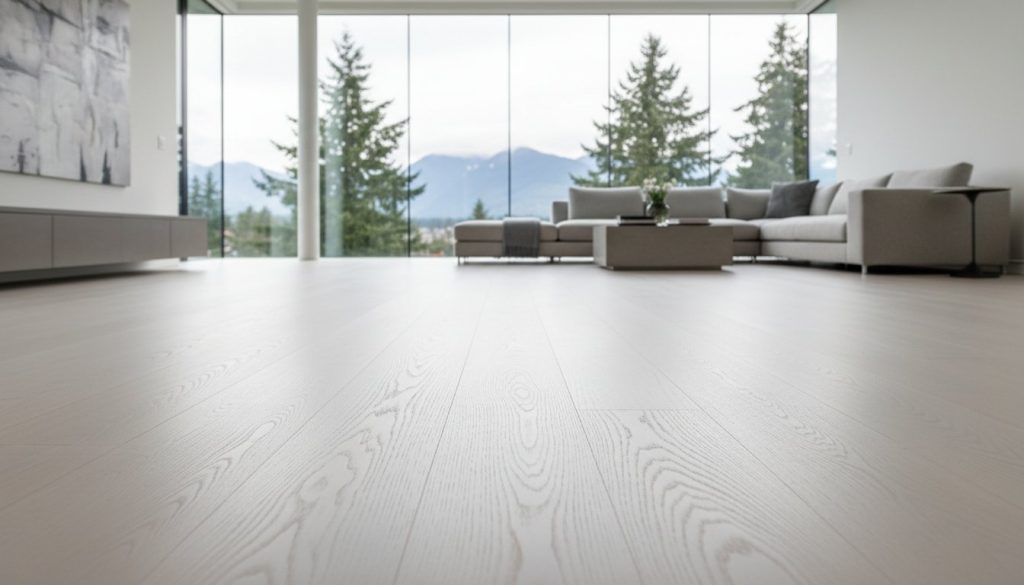
What if the most expensive hardwood floor flooring in Vancouver becomes a total loss in less than 24 months because of a single overlooked detail? You likely already know that our Pacific Northwest humidity is a relentless opponent for natural wood. It’s stressful to invest your hard-earned C$ into a renovation only to worry about cupping or warping every time a heavy rain hits the Lower Mainland. We understand that fear because we’ve seen it happen to homeowners who weren’t given the right technical guidance during the selection process.
In this 2026 guide, you’ll discover how to choose the perfect hardwood floor flooring for our unique climate and maximize your property value with professional installation insights. We draw on 15 years of local experience to help you navigate the choice between solid and engineered wood while ensuring your investment remains durable for decades. We’ll walk you through the essential “why” behind subfloor preparation and the specific local standards that guarantee a flawless, elegant finish for your home.
Key Takeaways
- Learn how to distinguish between solid and engineered wood to select a high-quality investment tailored for British Columbia’s unique housing market.
- Discover the essential steps for acclimatizing wood to Vancouver’s coastal humidity, ensuring your boards remain stable and beautiful throughout the seasons.
- Identify the perfect finish and style for your specific property, whether you are upgrading a high-traffic rental or a luxury Lower Mainland estate.
- Understand why professional subfloor leveling is the critical foundation for a flawless hardwood floor flooring installation that stands the test of time.
- Master a pro-active maintenance and restoration schedule designed to protect your property value and keep your floors in peak condition for decades.
Understanding Hardwood Floor Flooring: Types and Species for BC Homes
Investing in your home is about more than just surface-level beauty. For homeowners in Vancouver, choosing hardwood floor flooring represents a long-term commitment to property value and interior elegance. With over 15 years of experience serving the Lower Mainland, we’ve seen how the right choice transforms a space into a sanctuary. High-quality Wood flooring provides a versatile foundation for any interior design, offering options that range from traditional solid planks to modern wide-board engineered styles. This choice is a permanent upgrade that can last for generations when selected with local climate conditions in mind.
Solid vs. Engineered Hardwood: The Vancouver Verdict
Solid hardwood is the traditional choice for those seeking multi-generational durability. Each plank consists of a single piece of timber, allowing it to be sanded and refinished multiple times over 50 to 100 years. It’s a classic option for heritage homes where historical accuracy matters. However, its susceptibility to humidity makes it a challenge in certain BC environments where moisture levels fluctuate. Engineered hardwood utilizes a multi-layer construction of cross-grain plywood or HDF to create a moisture-resistant solution that remains stable during Vancouver’s humid winters and dry summers. This stability is why we often recommend engineered options for condos in Burnaby or any home utilizing radiant heating systems.
Popular Wood Species in the Lower Mainland
Selecting the right hardwood floor flooring requires a balance between lifestyle needs and design goals. Different species react differently to the West Coast environment. We focus on options that deliver both beauty and resilience.
- Maple: This is the durable, high-traffic choice for Vancouver families. Its tight grain pattern and high Janka hardness rating help it resist dents better than softer woods. It’s ideal for active households with pets or children where floor wear is a constant concern.
- Oak: White Oak offers a timeless aesthetic that complements both modern West Coast designs and heritage homes in Shaughnessy. It’s naturally resistant to rot and takes stains beautifully, allowing for a wide range of custom finishes from light “raw” looks to deep charcoals.
- Walnut and Exotic Species: These luxury options serve premium Vancouver estates looking for deep, rich tones. While Walnut is softer than Oak, its unique grain patterns and sophisticated dark hues make it a centerpiece of high-end interior design.
As a seasoned local expert, I know that species choice directly impacts how your floor handles the 160 plus days of rain we see annually in the Lower Mainland. Your species selection shouldn’t just be based on a color sample. It needs to account for the specific humidity of your neighborhood and the traffic patterns of your daily life. Choosing a wood with the right density and stability ensures your investment remains flawless for decades. Your dream floors are just one step away when you prioritize the right technical specifications for our unique BC climate.
Choosing Hardwood for Vancouver’s Coastal Climate
Vancouver averages 161 rainy days annually, making moisture management the top priority for any local renovation. Your hardwood floor flooring acts like a living material that reacts to its surroundings. Wood is hygroscopic, meaning it absorbs and releases water from the air. When humidity levels spike during a typical Lower Mainland winter, planks absorb moisture and expand. If the installation is too tight, the boards will cup or “peak” at the edges. When you turn on your home heating, the air dries out, causing the wood to shrink and leave gaps between planks.
Basements and ground-level suites are particularly high-risk zones. Traditional solid hardwood often fails in below-grade spaces because concrete subfloors naturally wick moisture from the soil. For these areas, we typically recommend engineered products which offer 30% more dimensional stability than solid wood. Before you purchase any materials, use this checklist to assess your home’s environment:
- Relative Humidity: Use a hygrometer to ensure your home stays between 35% and 55% humidity.
- Temperature Consistency: Maintain a steady indoor temperature between 18°C and 24°C.
- Subfloor Moisture: Confirm the subfloor is within 3% moisture content of the wood being installed.
- Drainage Check: Ensure exterior perimeter drains are functioning to prevent foundation dampness.
Humidity Control and Moisture Barriers
Protecting your investment starts below the surface. Vapour barriers are essential in the Vancouver climate to block ground moisture from reaching your planks. During the heavy rainy season from October to March, indoor climate management becomes vital for the longevity of your floors. At Saba Flooring, our 15 years of experience has taught us that every home is different. We perform detailed moisture testing during your initial consultation to ensure your subfloor meets the NWFA Installation Guidelines before a single board is laid.
Best Practices for Acclimatising New Wood
You can’t rush quality installation. New wood needs time to reach an equilibrium with your home’s unique environment. We require wood to sit in the installation room for 3 to 7 days. Skipping this step is the primary reason for gaps and buckling in 2026 installations. Professional installers always verify wood moisture content with a meter to confirm it matches the home’s ambient conditions. This meticulous process ensures your hardwood floor flooring remains stable for decades. If you’re unsure about your home’s readiness, consult with our local experts to get a professional assessment of your space.
Selection Guide: Matching Hardwood to Your Property Type
Choosing the right hardwood floor flooring depends entirely on how you use your space. For 15 years, our team has seen how Vancouver’s damp climate and specific property types dictate the longevity of a floor. A high-turnover rental in Kitsilano requires a different strategy than a multi-generational estate in Shaughnessy. Your selection framework should prioritize durability for high-traffic areas and aesthetic precision for architectural showcases.
The finish you choose defines the floor’s personality and maintenance requirements. Wire-brushed and distressed finishes are highly popular in 2026 because they hide the small scratches and dents common in active households. Smooth finishes offer a timeless, glass-like elegance, but they’re less forgiving and show dust more easily. We’re also seeing a massive shift toward wide planks. While 7.5-inch to 10-inch planks create a stunning, expansive feel, they require extreme subfloor precision. Any deviation greater than 3mm over a 3-meter span can lead to stability issues. You can explore these high-end options in our guide to The Best Hardwood Trends for Vancouver Estates in 2026.
Hardwood for High-Traffic Rental Units
For investment properties in the Lower Mainland, durability is the primary metric. We recommend harder species like Maple or Hickory. Maple has a Janka hardness rating of approximately 1450, while Hickory sits at 1820, making them much more resistant to tenant wear than softer woods. Using a matte finish with a wire-brushed texture helps mask the inevitable scuffs from pets or furniture moves. To ensure your investment remains profitable, following NWFA maintenance guidelines is essential for long-term care. In many cases, a high-quality hardwood is more cost-effective for property managers than laminate because it can be professionally refinished up to five times rather than being replaced every decade.
Luxury Finishes for Modern Vancouver Interiors
Modern West Coast design has moved away from high-gloss surfaces toward matte and satin finishes that highlight the natural grain of the wood. These low-sheen options provide a sophisticated backdrop for contemporary furniture. If you want to push the boundaries of traditional design, 3D flooring and custom patterns are the new standard for luxury. For a truly bespoke look, consider Professional Parquet Flooring Installation in Vancouver. This approach uses geometric precision to create a masterclass in craftsmanship that stands out from standard plank layouts.
- Wire-brushed: Best for families and hiding daily wear.
- Smooth: Ideal for minimalist, modern aesthetics.
- Wide Plank: Enhances the scale of large, open-concept rooms.
- Satin Finish: Offers a subtle glow without the maintenance of high-gloss.
Your dream floors are just one step away when you match the right species and finish to your specific property needs. Whether you’re upgrading a rental or building a custom home, the right choice ensures your hardwood floor flooring remains a point of pride for years.
The Foundation of Success: Subfloor Levelling and Prep
Achieving a flawless hardwood floor flooring installation starts long before the first plank is laid. Many homeowners mistakenly believe that high-quality wood will mask a bumpy or slanting floor. In reality, new hardwood actually highlights every dip and peak in your foundation. If the subfloor isn’t flat, your planks will flex, gap, and eventually fail. Saba Flooring treats subfloor preparation as a critical, billable service because it’s the only way to guarantee a silent, stable surface that lasts decades. Skipping this step often leads to costly repairs and structural noise within the first 12 months of use.
Why Vancouver Subfloors Need Special Attention
Vancouver’s unique geography and older housing stock present specific challenges for homeowners. Homes in neighborhoods like East Vancouver or Kitsilano often experience significant foundation settling due to the region’s moisture levels and soil composition. We frequently encounter wooden joists that have sagged by as much as 2.5 centimeters over a short span. To fix this, our technical process involves grinding down high spots in concrete or applying specialized self-levelling compounds to create a perfectly horizontal plane. Subfloor tolerance is the technical measurement of flatness that represents the difference between a squeaky, irritating floor and a silent one. You can learn more about our Expert Floor Leveling Services in Burnaby to understand how we secure your home’s foundation.
The Saba Flooring Installation Process
Our team brings 15 years of experience to every project in the Lower Mainland. We don’t just install wood; we engineer a surface. The process begins with a moisture test and a laser-level assessment to identify hidden irregularities. Once the subfloor meets our strict 3-millimeter tolerance standard, we proceed with the hardwood floor flooring layout. This meticulous attention to detail is why our renovations stay stress-free. We handle the heavy lifting, from initial surface grinding to the final flawless finish. Before our crew arrives at your door, we recommend reviewing the New Floor Installation Checklist to ensure your space is ready for a professional transformation.
Ready to ensure your renovation starts on solid ground? Contact Saba Flooring today for a professional subfloor assessment.
Maximizing ROI: Maintenance and Professional Restoration
Choosing hardwood floor flooring isn’t just a design upgrade; it’s a long-term financial strategy for your home. While materials like carpet or luxury vinyl eventually require total replacement, hardwood remains the only flooring category that you can restore to its original glory multiple times. This renewability is why hardwood consistently offers a high return on investment for Vancouver homeowners, often adding significant value to property assessments in the competitive British Columbia market. By opting for restoration over replacement, you reduce waste and maintain the historic character of your living space.
Daily and Seasonal Care for Vancouver Floors
Our local climate demands a specific maintenance routine to protect your investment. With Vancouver averaging over 160 rainy days a year, moisture management is your top priority. Wet umbrellas and rain-soaked boots can cause wood to swell or cup if left unchecked. You should place high-quality area rugs or mats at every entryway to trap the abrasive grit and salt common in the Lower Mainland during winter months. This simple step prevents the “sandpaper effect” that destroys your elegant finish over time.
It’s vital to avoid generic floor cleaners found in local supermarkets. Many of these products contain waxes or oils that leave a stubborn residue on your surface. This buildup makes it impossible to perform a simple “buff and coat” later, often forcing you into a more expensive full sand and finish. Instead, use a microfiber mop and a pH-neutral cleaner specifically formulated for your floor’s specific finish type. Consistent, gentle cleaning keeps the wood’s natural beauty visible without the cloudy film left by inferior chemicals.
Long-Term Value: Refinishing and Repair
Understanding the limits of your material is essential for long-term planning. Solid hardwood planks can typically withstand 4 to 7 full sandings over their lifetime, lasting up to a century. Engineered hardwood is more variable; high-quality versions with a 4mm wear layer can be refinished 2 or 3 times, while thinner products may only handle a light professional screening. If you notice graying patches where the finish has worn away, or deep scratches that have penetrated the wood grain, it’s time to call in the experts.
Prompt action prevents minor damage from becoming a structural issue. For localized problems like water stains or deep gouges from moving furniture, you should seek Professional Hardwood Floor Repair in Vancouver before the damage spreads. Professional restoration every 10 to 15 years keeps your home looking flawless and ensures your hardwood floor flooring continues to perform for decades.
Your dream floors are just one step away—Get a quote from Saba Flooring.
Bring Lasting Elegance to Your Vancouver Home
Investing in high quality hardwood floor flooring is a decision that defines the character of your property for decades. Success depends on selecting species that thrive in our specific coastal humidity and prioritizing professional subfloor levelling to prevent future shifting. Whether you’re upgrading a heritage house in Burnaby or a modern condo in Vancouver, the foundation you build today determines your long term return on investment. It’s about more than just aesthetics; it’s about protecting your home’s value with materials suited for the Pacific Northwest.
Saba Flooring brings 15 years of local experience to every project across the Lower Mainland. We combine traditional craftsmanship with specialized 3D design and levelling services to ensure a flawless finish that stands the test of time. Our team understands the unique technical demands of British Columbia homes and delivers results that balance technical precision with timeless style. You don’t have to navigate the complexities of renovation alone when you have a seasoned partner by your side. Your dream floors are just one step away.
Transform your home with Vancouver’s hardwood experts; request your free estimate today!
Frequently Asked Questions
Is solid or engineered hardwood better for Vancouver’s climate?
Engineered hardwood is the superior choice for Vancouver because its cross-layered construction handles our local humidity fluctuations better than solid wood. Since Vancouver humidity levels often range between 60% and 80%, solid planks can expand or contract excessively. Engineered products remain stable, ensuring your hardwood floor flooring stays flat and beautiful despite the coastal air.
How much does professional hardwood installation cost in the Lower Mainland?
Professional labor for hardwood installation in the Lower Mainland typically ranges from C$3.00 to C$6.00 per square foot according to 2024 regional contractor averages. This price reflects the expertise required for precision cutting and layout. Total costs will vary based on whether your project requires extra site preparation or complex herringbone patterns.
Can I install hardwood flooring over a concrete subfloor?
You can install engineered hardwood over concrete subfloors using either a glue-down or floating method. Solid hardwood isn’t suitable for direct concrete application because it requires a wooden subfloor for nailing. Our team always verifies that moisture levels in the concrete are below 4% to prevent any future adhesive failure or wood damage.
How long does it take for hardwood to acclimatize in a Vancouver home?
Most hardwood products require a minimum of 72 hours to adjust to your home’s specific environment. For solid wood installations, we often recommend a 7 to 10 day period to ensure the planks stabilize. This step is vital in the Lower Mainland to prevent the wood from shifting after the installation is complete.
Will my hardwood floors warp if I don’t have a dehumidifier?
Your floors may experience cupping or crowning if your indoor humidity moves outside the 35% to 50% ideal range. Vancouver’s rainy winters can push indoor moisture levels high enough to cause visible changes in the wood. Using a dehumidifier during wet months helps maintain the 15 years of beauty you expect from a premium installation.
What is the most durable hardwood species for homes with pets?
White Oak and Hickory are the most resilient choices for households with active pets. Hickory features a Janka hardness rating of 1820 lbf, making it significantly tougher than softer species like Cherry or Walnut. Choosing a wire-brushed texture on your hardwood floor flooring also helps mask any minor scratches that occur from pet claws over time.
Do I really need floor levelling before installing new hardwood?
You must level the subfloor if there’s a height variation greater than 3/16 of an inch over a 10-foot span. Skipping this step leads to “hollow” sounds when you walk and puts unnecessary stress on the floor’s locking system. Proper leveling ensures a flawless finish and prevents the 20% increase in wear that uneven floors often suffer.
How do I fix a scratch in my hardwood floor?
You can repair minor surface scratches using a color-matched touch-up pen or a specialized wax filler stick. For deeper gouges that penetrate the stain, you may need to lightly sand the area and apply a fresh dab of polyurethane. If a single plank has more than three deep scratches, replacing that specific board is usually the most professional solution. Your dream floors are just one step away.